Dominique and Arnoud Roudhloff were French makers trained in Mirecourt by their father Francois, who was himself an excellent guitar maker as well as a violin maker. The brothers moved to London in the 1830s and set up shop.
In 2022 I was approached by Edinburgh based lutenist and multi-string guitarist Rob MacKillop to do some work on a D and A Roudhloff guitar that he’d recently acquired. I readily agreed as I was keen to study it.
Although most of my classical guitar output has been of the Spanish school fan-braced type, going back to 2009 it was the Roudhloff brothers’ unusual X-brace design for supporting the front that first inspired me to try that bracing method for the classical guitar myself. I tried it in several of my own guitar body shapes with good results. In 2017 I used the X-brace pattern in an 8-string guitar that was based on a D & A Roudhloff body shape, and again in 2022. Every guitar maker is familiar with the X-brace pattern, as it has been used from the 19th century onwards for steel-string guitar production, while being almost universally ignored for classical guitar making since the Roudhloff brothers’ day. And now I had the opportunity to study their six-string Melophonic model. Rob and I made an amicable agreement that I would sort out his guitar in exchange for keeping it a while.
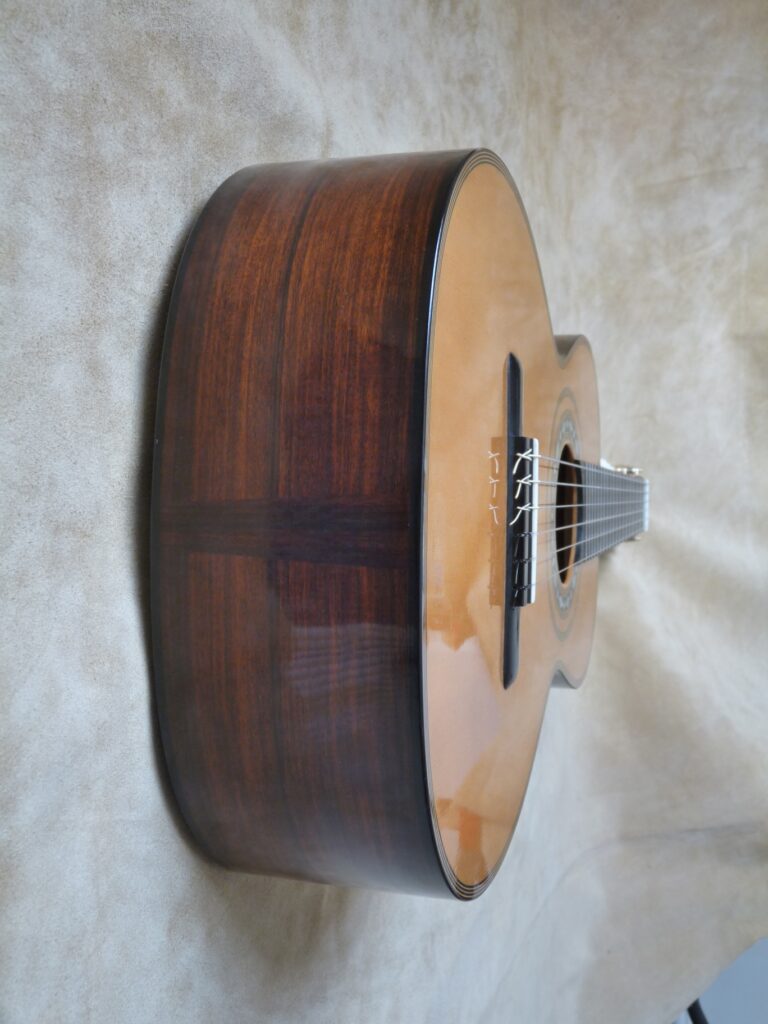
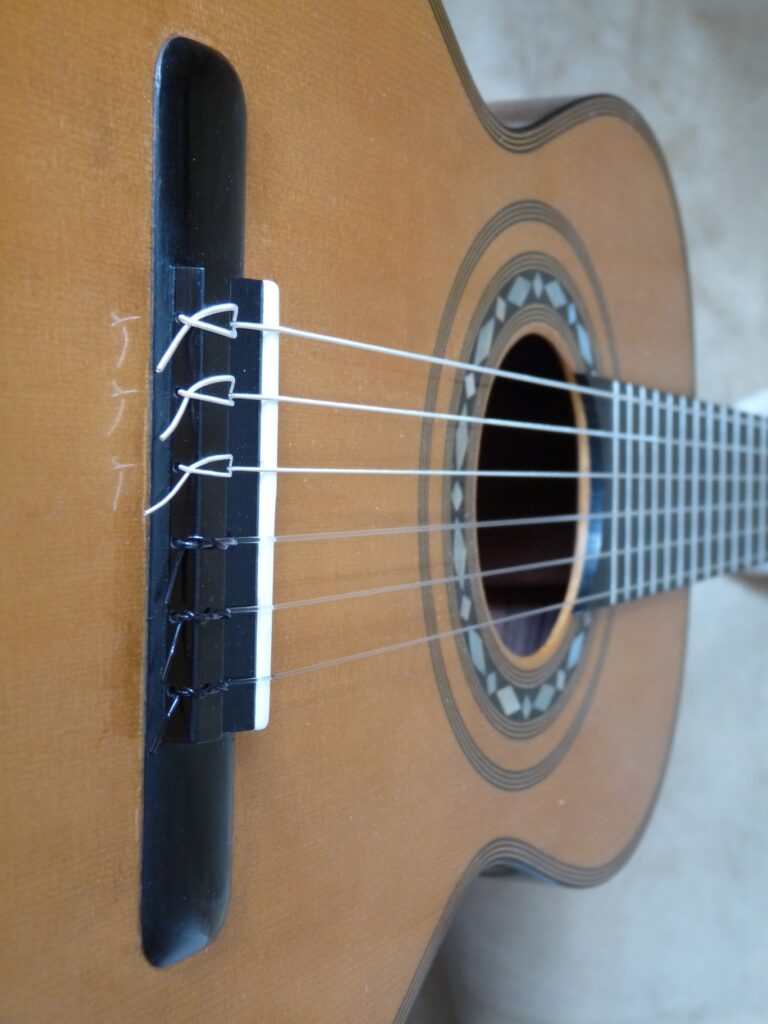
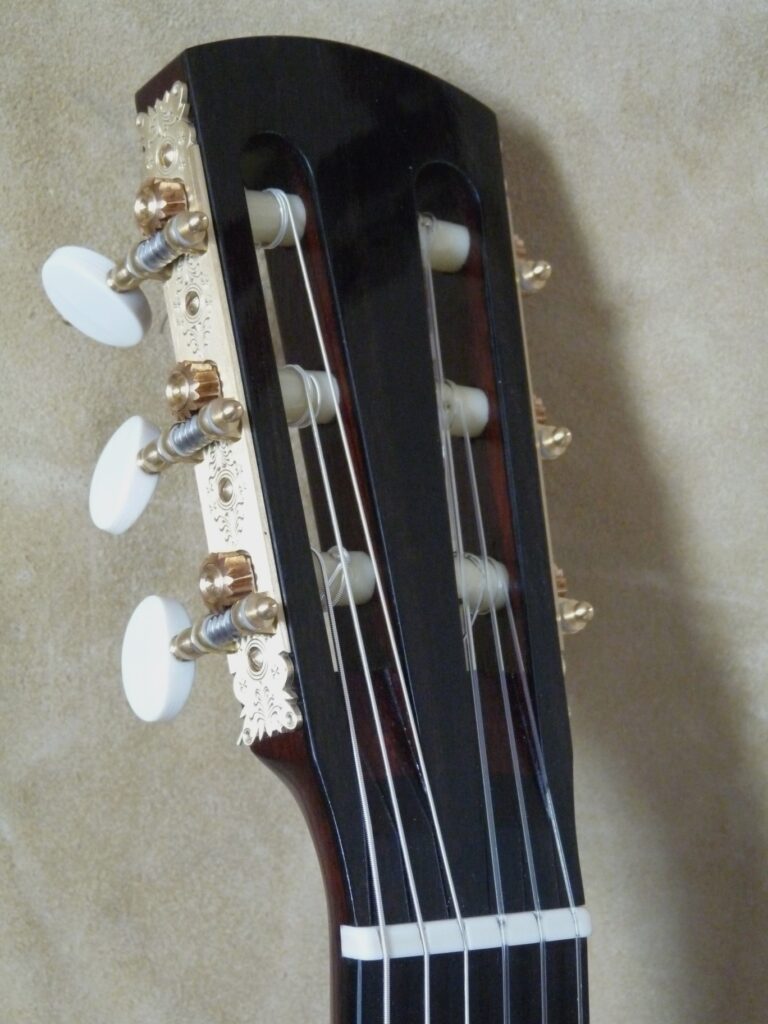
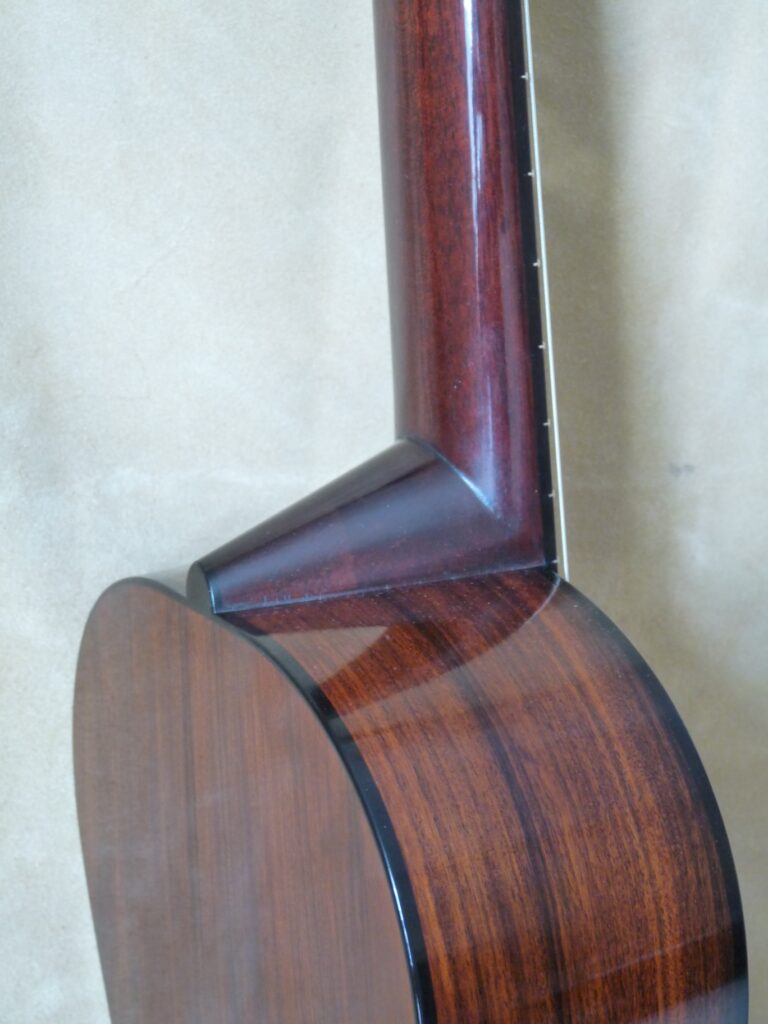
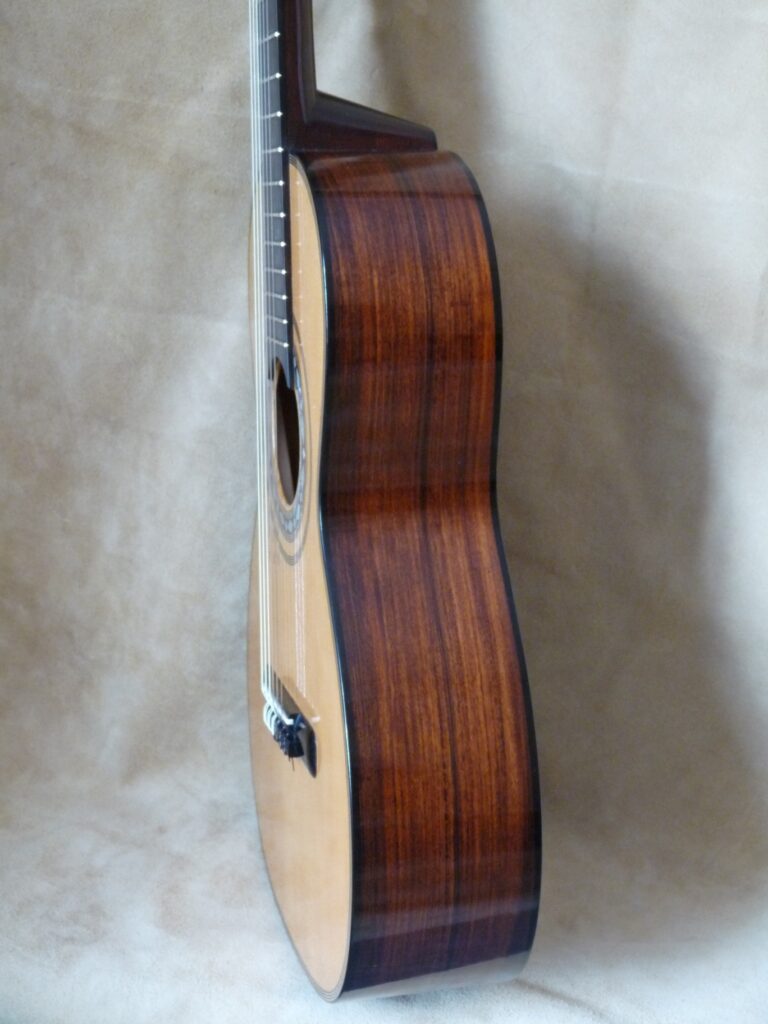
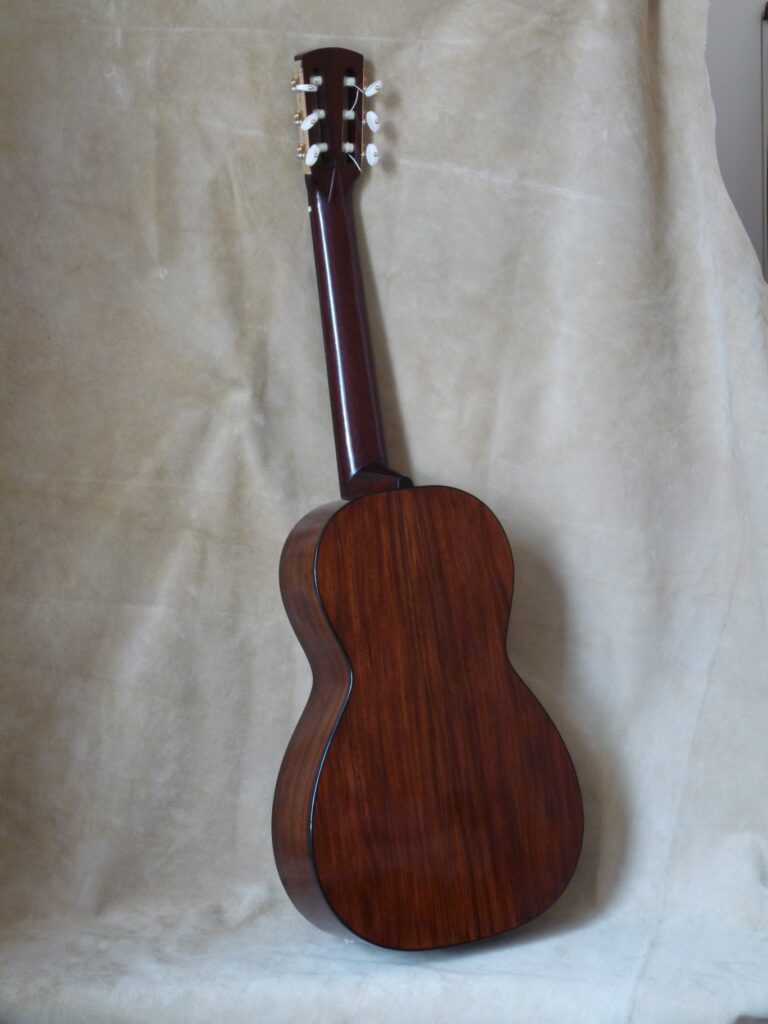
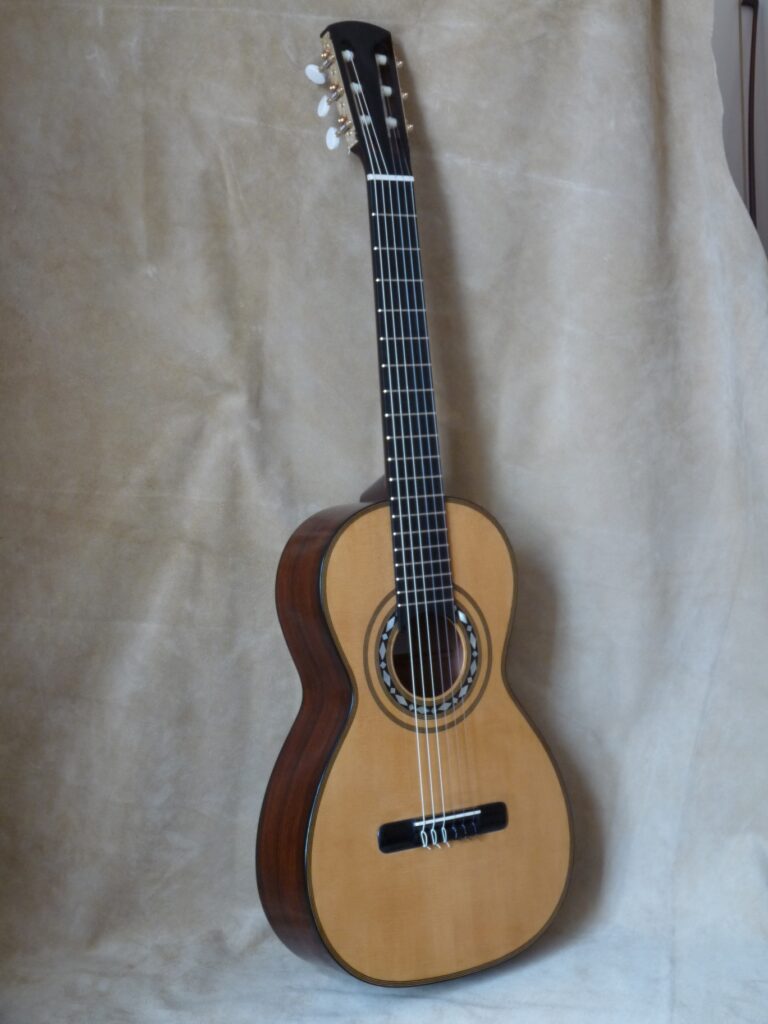
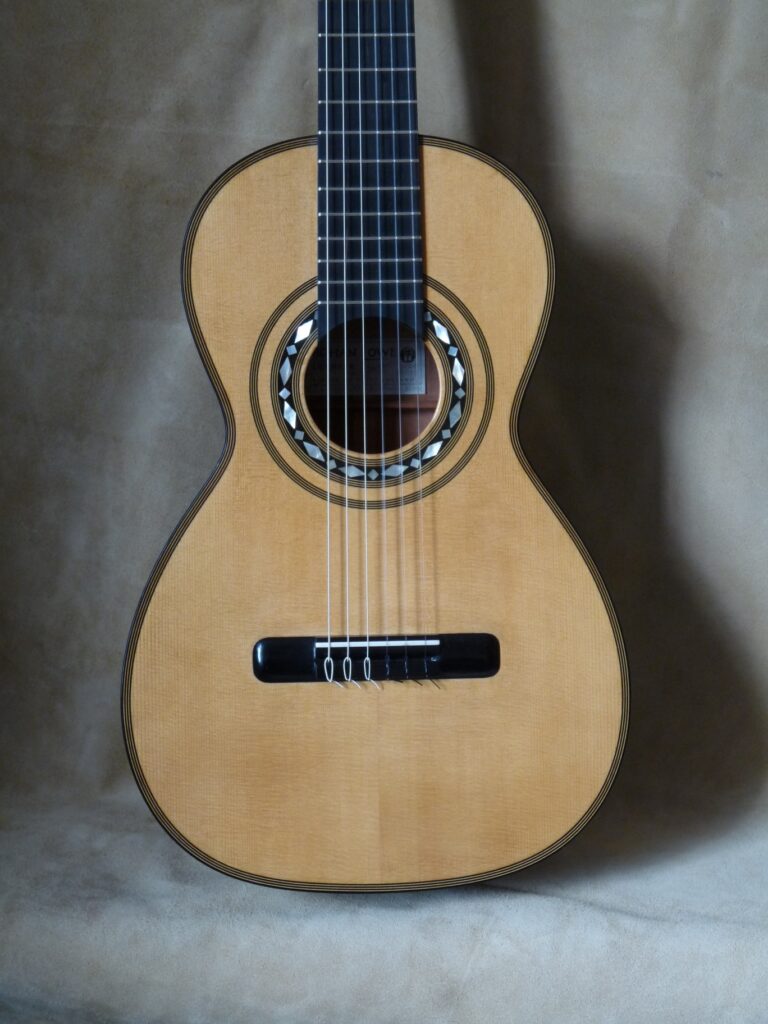
Last year ( 2024) I made my first Melophonic copy ( scroll down for photos of it). I had already used the body shape for Rob MacKillop’s 13 string baroque guitar-lute. Later that year I also built a six-string steel-string version of the Melophonic guitar for a friend who was attracted to the design. In fact, the body shape and size is very similar to a Martin guitar ( also X-braced) of the same period. So similar, that there is some contention about whose design came first, C.F. Martin or the Roudhloff brothers.
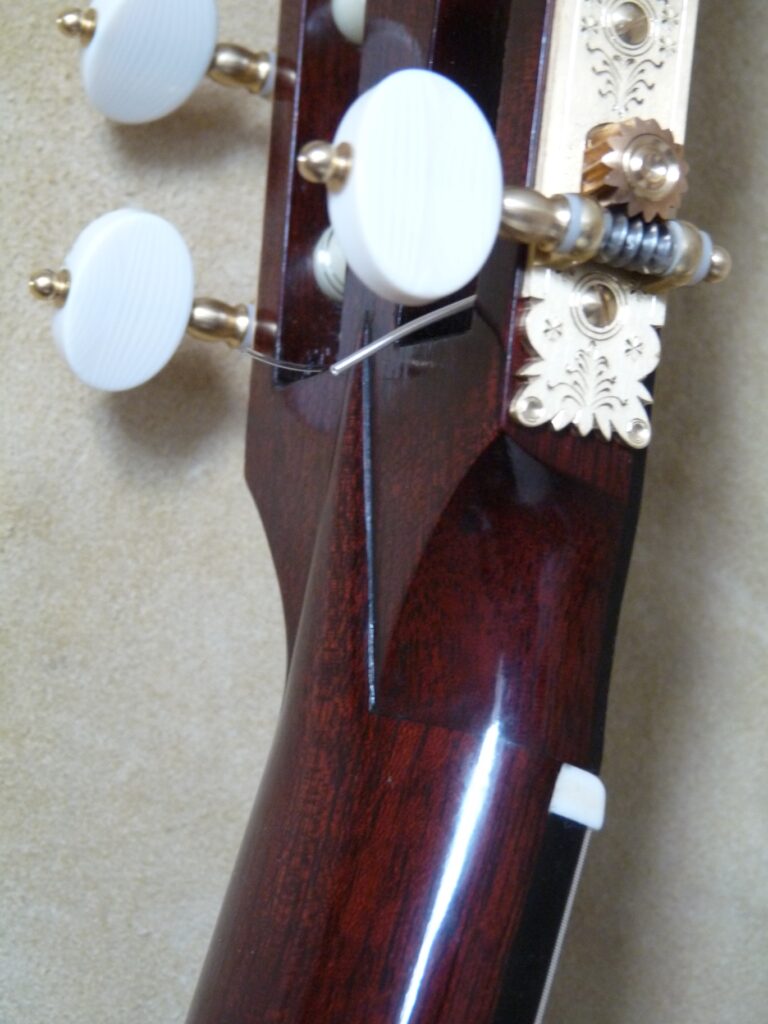
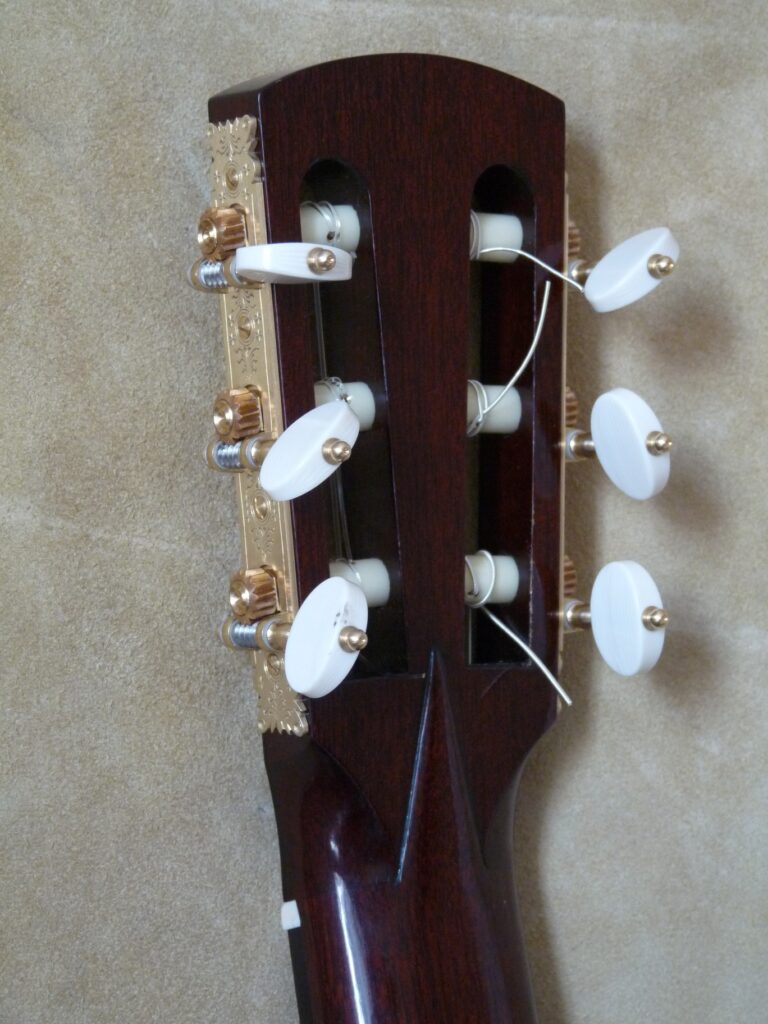
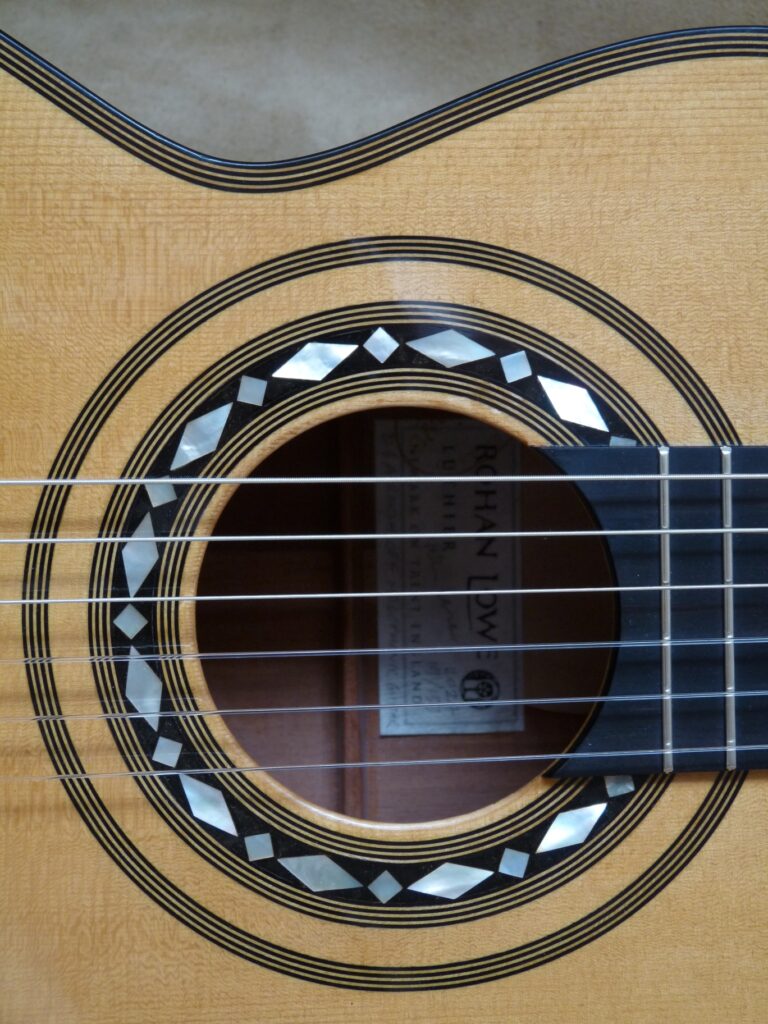
My copy has a spruce front, of course, like the original. I used recycled mahogany for the back, but instead of Brazilian rosewood, I veneered it with Santos rosewood and solid Santos rosewood ribs. I have tried to produce a faithful copy, although I didn’t veneer the neck – I used a piece of solid Cuban mahogany, with the long tapered V-joint head. It is fitted with some historically appropriate-looking, reverse-geared tuning machines by Nicolo Alessi.
The scale-length is 630mm.
To see a clip of Rob MacKillop playing it, click here.
To see photos of the original and more information about how it is made, click here.
And for photos of the steel-string version, click here.